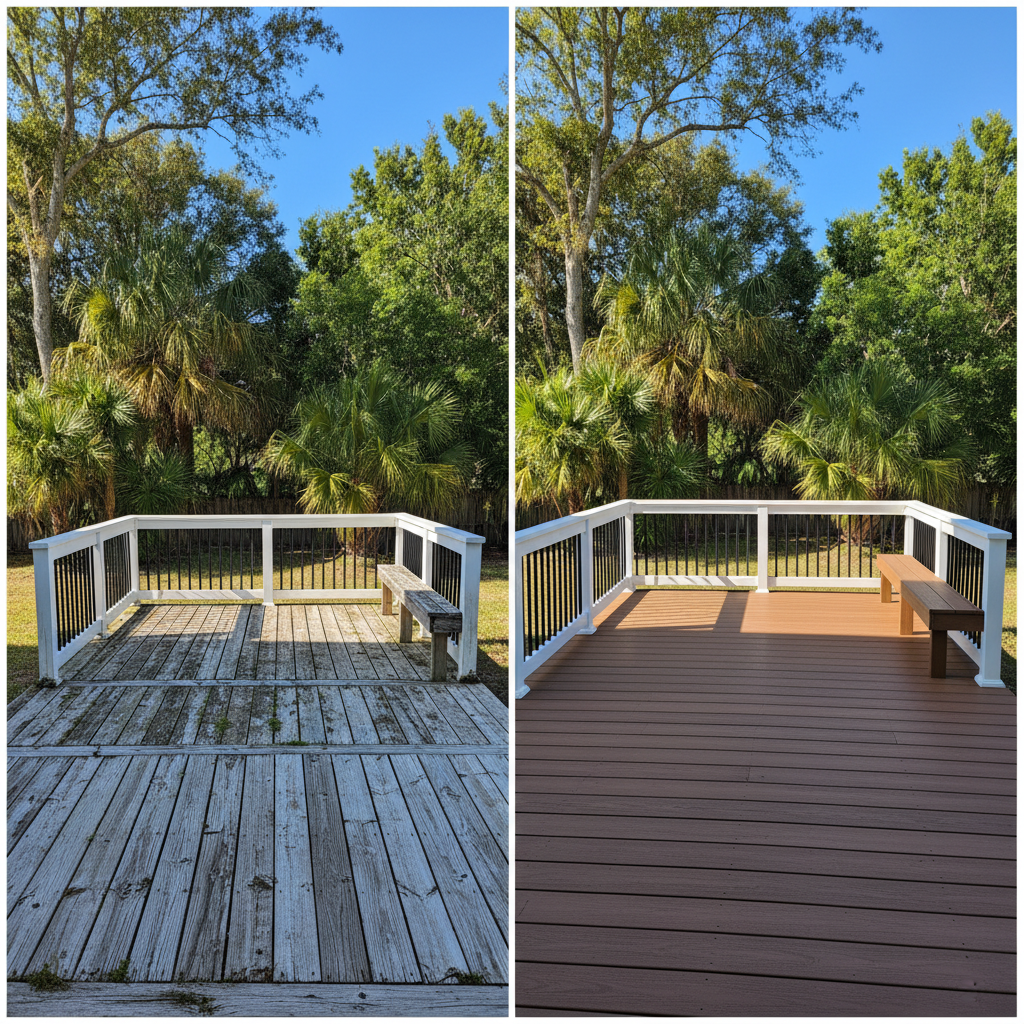
Alright, let's talk composite decks. Seems like everyone's looking for something low-maintenance these days, and composite definitely fits the bill better than wood. But it's not as simple as just picking 'composite.' You've really got two main types to consider: capped and uncapped. And for us here in Cross City, Florida, that choice makes a big difference.
What's the Deal with Uncapped Composite?
So, uncapped composite decking was one of the first generations of composite materials. It's basically a mix of wood fibers and plastic, all blended together and extruded into deck boards. Think of it like a giant, solid block of that mixture.
Cost: Generally, uncapped composite is going to be your cheaper option upfront. It's less material and a simpler manufacturing process, so the price tag reflects that.
Durability: It's tough, don't get me wrong. It won't rot like wood, and termites aren't interested in it. But because it doesn't have that outer shell, it's more susceptible to things like mold, mildew, and staining. Here in Florida, with our humidity and the way things just grow on everything, that's a real concern. You'll also see it fade more over time as the sun beats down on it. It can absorb moisture, too, which can lead to expansion and contraction, and even some cracking if it's not installed just right.
Maintenance: While you don't have to stain or seal it, you'll definitely be cleaning it more often. Pressure washing is usually okay, but you've got to be careful not to damage the surface. If you spill something like grease or red wine, it can really soak in and be tough to get out. You'll be scrubbing, I promise you.
Appearance: When it's new, it looks fine. But over time, that fading and potential for stains really takes away from its curb appeal. It tends to have a more uniform, less natural look than some of the newer capped options.
How About Capped Composite?
Now, capped composite is the newer, improved version. It's still a core of wood fibers and plastic, but it's got a durable, protective polymer shell wrapped around three or four sides of the board. Think of it like a candy bar with a hard outer coating.
Cost: This is where you'll see a higher price point. That cap adds to the manufacturing cost, and you're paying for the extra protection and technology. But remember, sometimes paying more upfront saves you a lot more down the road.
Durability: This is where capped composite really shines, especially for us. That polymer cap is designed to resist fading, staining, scratching, and, most importantly for Florida, mold and mildew. Water beads right off it. I've seen these decks hold up beautifully even after years of our intense sun and those summer downpours. It's much more stable too, so less expansion and contraction.
Maintenance: This is as close to 'set it and forget it' as you're going to get with a deck. A simple hose-down or a light wash with soap and water is usually all it takes to keep it looking good. Spills wipe right off. You won't be spending your weekends scrubbing mold off your deck, which is a big win in my book.
Appearance: Modern capped composites have come a long way. They often have realistic wood grain patterns, multi-tonal colors, and a matte finish that looks a lot more like natural wood than the older uncapped stuff. They keep that 'new' look for a much longer time.
My Recommendation for Cross City Homeowners
Look, if you're building a deck here in Cross City, you're dealing with some specific challenges. We've got that intense Florida sun, high humidity, and plenty of rain. Plus, depending on where you are, like near the Steinhatchee River or out towards the Gulf, you might even have salt air to contend with. And let's not forget the constant battle against mold and mildew that thrives in our climate.
Given all that, my clear recommendation for homeowners in Cross City is to go with capped composite decking. Yes, it's a bigger investment upfront. But the long-term benefits far outweigh that initial cost.
You'll spend less time cleaning and more time enjoying your outdoor space. You won't have to worry about your deck looking faded and dingy after just a few years. It'll resist the mold and mildew that would otherwise be a constant headache. It's built to stand up to our unique Florida conditions.
I've installed plenty of both types over the years, and I can tell you, the homeowners who went with capped composite are always happier in the long run. They get a deck that stays beautiful and performs reliably for decades with minimal fuss. That's what we aim for at Aim High Deck Solutions – building decks that last and make your life easier, not harder. Don't cheap out on your deck; you'll regret it when you're scrubbing green gunk off it every other month.