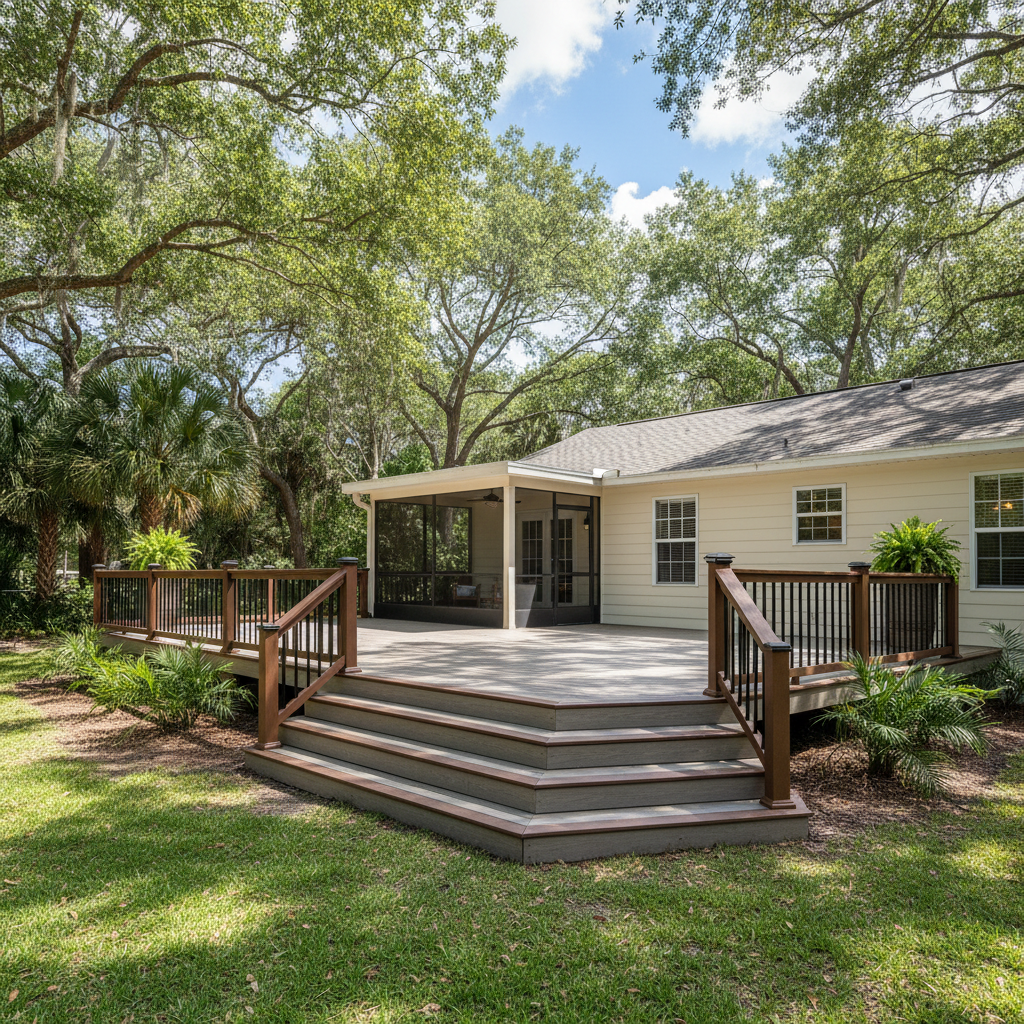
Getting Your Trex Deck Built: Timing is Everything in Cross City
So, you're thinking about a Trex deck? That's a really smart choice for our Florida climate, no doubt about it. But figuring out the best time to actually get it built? That's not as simple as just picking a month off the calendar. Our local weather here in Cross City – especially that brutal summer heat and our famous rainy season – really dictates when we can work efficiently, and, frankly, when the material itself behaves best.
I've found the sweet spot for new deck construction, especially when we're using composite materials like Trex, is usually late fall right through early spring. Think October, November, then February, March, and April. Why those months? Well, for starters, the ground isn't nearly as saturated as it gets after a summer packed with afternoon thunderstorms. Plus, the temperatures are just much more agreeable for both our crew and the materials we're working with. When it's 95 degrees with 90% humidity, Trex boards expand a lot. We always account for that expansion, but it's just easier when the ambient temperature stays more stable. You really don't want us wrestling with boards that are trying to grow an inch in the sun and then shrink back down overnight, do you?
Can we do summer builds? Absolutely, we can. But you should expect us to start super early, knock off when the heat index gets absolutely ridiculous, and be ready for rain delays. Those pop-up afternoon storms aren't just annoying; they can turn the site into a muddy mess, make it unsafe, and we certainly can't be cutting or fastening properly in a downpour. Honestly, it's just not ideal for anyone involved, and it can really stretch out the project timeline.
Weather Conditions That Affect Your Trex Deck Installation
When we're building your Trex deck, there are a few key things we're always keeping an eye on. Temperature, obviously, is a big one. Trex, just like any composite, will expand and contract as temperatures change. We intentionally leave specific gaps between boards and at butt joints to allow for this movement. If we install on a cold day, those gaps might look a little bigger, but they'll close up once it gets hot. If we install on a scorching day, the gaps will be smaller, and they'll widen when things cool down. It's a careful balancing act, and our experience with these local temperature swings really helps us get it just right.
Humidity is another factor, though it's less critical for Trex than it is for traditional wood. Still, high humidity can make surfaces slick, especially if there's morning dew. And then there's the rain. We simply can't pour concrete for footings in standing water. Drilling and fastening in the rain isn't just uncomfortable; it can be downright dangerous and can compromise the quality of the work. Plus, our soil here, especially in those low-lying areas near the Suwannee River, can get incredibly mucky after a good rain. Trying to dig post holes in that? It's a nightmare, and it just slows everything down.
Wind usually isn't a huge problem for deck building unless it's really gusty. But a strong breeze on a hot day? That can actually help keep us cooler, which is always a bonus.
Protecting Your Trex Investment Year-Round in Cross City
You've put money into a Trex deck, which is fantastic because it's pretty low maintenance. But "low maintenance" doesn't actually mean "no maintenance." Here's what you'll need to do to keep it looking great:
- Regular Cleaning: Even Trex gets dirty, believe it or not. Dust, pollen, leaves, and that green stuff (algae/mildew) that just loves our damp climate will settle. A good sweep with a soft-bristle broom and a wash with soap and water (or a composite deck cleaner) a few times a year will work wonders. For tougher spots, a pressure washer on a low setting (under 1500 PSI) with a fan tip, held at least 12 inches away, can be effective. Just be careful not to damage the surface, okay?
- Watch for Stains: Grease from the grill, spilled drinks, or even leaves left to decompose can leave marks. Clean these up as quickly as you can. Most common stains will come off with soap and water, but for the really stubborn ones, Trex has specific cleaning recommendations right on their website.
- Clear Debris: Don't let leaves, pine needles, or other organic matter sit on your deck for long periods, especially during our wet seasons. They hold moisture and can really encourage mold and mildew growth, even on composite.
- Check Underneath: Every now and then, take a peek under your deck if you can. Make sure there's good airflow and no excessive moisture buildup. Our high humidity can be a breeding ground for mildew, even on the underside of boards.
- Protect from Furniture Scratches: Put felt pads or glides on the feet of your outdoor furniture. While Trex is durable, dragging heavy chairs can still leave scuffs.
By being smart about when you build and taking just a little time for seasonal care, your Trex deck from Aim High Deck Solutions will be a beautiful, lasting addition to your Cross City home for years to come. It's all about understanding our unique Florida conditions and working with them, not against them.